

Malting
Our first step is to source the best barley. As the ideal variety of barley had not been grown regularly on the Isle of Wight in recent years, we are working with local farmers with the aim of growing sufficient barley for our future needs. Once harvested, the starch in the barley grains need to be turned into fermentable sugars; a process called malting.
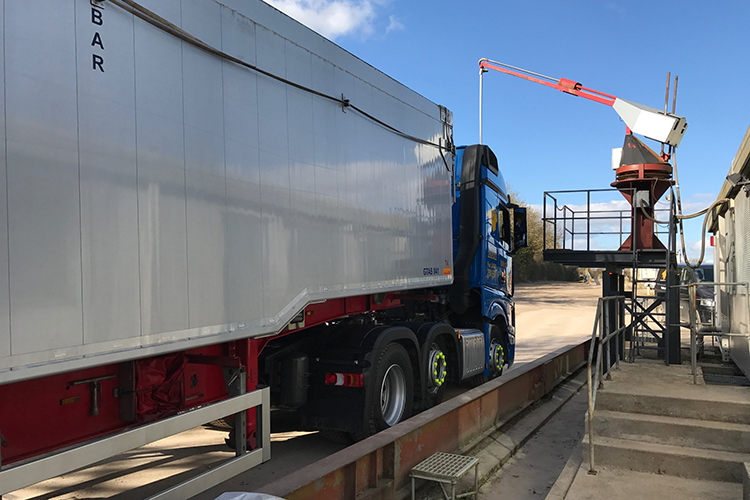
Steeping
Steeping the grain in warm water encourages the barley grains to germinate, this changes the chemical structure of the barley. The sprouted grain is kilned (heated) to stop it sprouting further when its considered the enzymes created are optimal (which is an art). Our barley is malted in a traditional way by an artisan malthouse and returns to us, ready crushed, in 25kg bags.
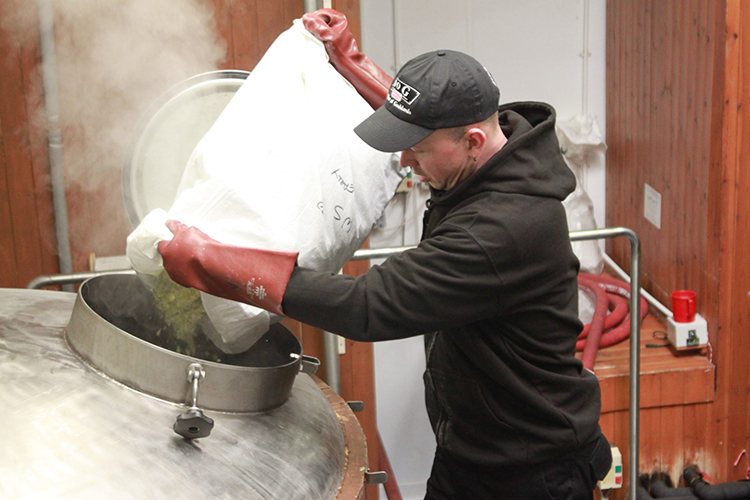
Preparing
Before a brew, all the ingredients are prepared. The water, sourced from a natural spring in Knighton, is tested for calcium content, which can be adjusted to our requirements. From this point, the water is referred to as liquor. The malt is weighed out with the required amount of crystal malt (for mouthfeel and flavour), torrified wheat (for head retention) and roasted barley (for colour and flavour). These dry ingredients are known as the grist. A different combination of grist is used for each beer.

Hops Selection
Hops are chosen to give each beer its distinctive bitter flavour, as well as providing stability to the brew. Goddards use a different blend of hops in each of our beers, except Fuggle-Dee-Dum which uses 100% Fuggle hops. The hops arrive as pellets and are then weighed out depending on the recipe being used. Other flavours can be added, for example our Quarr Abbey Ale uses coriander and sweet gale that is grown in the Abbey’s own gardens.

Mashing
On brew day, the liquor has been prepared to the right temperature before adding the grist. This will produce a mash. The heat of the mash is controlled by mixing hot and cold liquor to achieve a temperature of 65 degrees centigrade. Varying this temperature up or down by a degree or so alters the proportion of un-fermentable sugars (dextrins) and thus the sweetness and mouthfeel of the finished beer. The mash is left for an hour, during which time the enzymes in the malt are activated and convert most of the starch in the malt into fermentable sugar.

Boiling
The liquor has now become wort which is boiled in a copper. Early hops are added at the beginning that provide bitterness. Later hops are added at the end of the boil to give aroma. After which is is cooled and transferred to a brewing tank.

Fermenting
This is where we make the alcohol. Once the wort has been cooled, the yeast is added. The more malt in the brew, the more sugar is present. It is the sugar that feeds the yeast and gets converted into carbon dioxide and alcohol. The more sugar in the brew, the stronger the beer. Once all the sugar has been consumed, the yeast dies and falls into the bottom of our conical fermentors before the beer is extracted.

Racking
The beer is then racked off into casks where it stays in the brewery for a further week. During this time there is a secondary fermentation know as conditioning. The our cask-conditioned Goddards beer is then ready for its final journey to the pub.